
Welcome to this translation project! I’m 鴻因, a Chinese expat in Germany. Some of you may know me as “Arthur“, the founder of r/Chinese_handwriting. This is my attempt to create a complete English translation of the novel 紅樓夢 / Dream of the Red Chamber, with detailed annotations. Because this work builds on the scholarship of countless others, I will keep it completely free to the public.


Why am I doing this?
Many readers will know that Dream of the Red Chamber (hereafter abbreviated as DotRC) already has two full English translations available: A Dream of Red Mansions by Mrs. Gladys Yang & Mr. Hsien-yi Yang, and The Story of the Stone by Dr. Hawkes & Dr. John Minford. Besides that, Mr. Daniel Evensen has been working on a new translation since last year and has made steady progress (check out his blog!). In my humble opinion, they have all done a marvelous job. However, I find both of the published works insufficiently annotated, and in some places less close to the Chinese text than I would prefer. Mr. Evensen has improved significantly on those aspects but his reliance on the Cheng-Yi edition remains a problem for me, since it sometimes departs too far from the earlier texts. I also disagree with a number of his annotations. Since most of his posts are, understandably, behind a paywall, this project will remain free to read.
Although I have not formally studied translation or Chinese literature, and English is not my strongest language, my advantages are: (1) access to some of the best reference books available, (2) a solid understanding of Chinese language, literature and customs, and (3) the assistance of several native English-speaking friends, one of whom has studied Sinology. I hope to present you a free translation based on textual materials closest to the original work, with fuller and more useful annotations.


How will this project be structured?
translation
My translation will be published in two versions: one with only essential annotations for new readers, and another with fuller annotations, including spoilers, for readers familiar with the novel.
original text
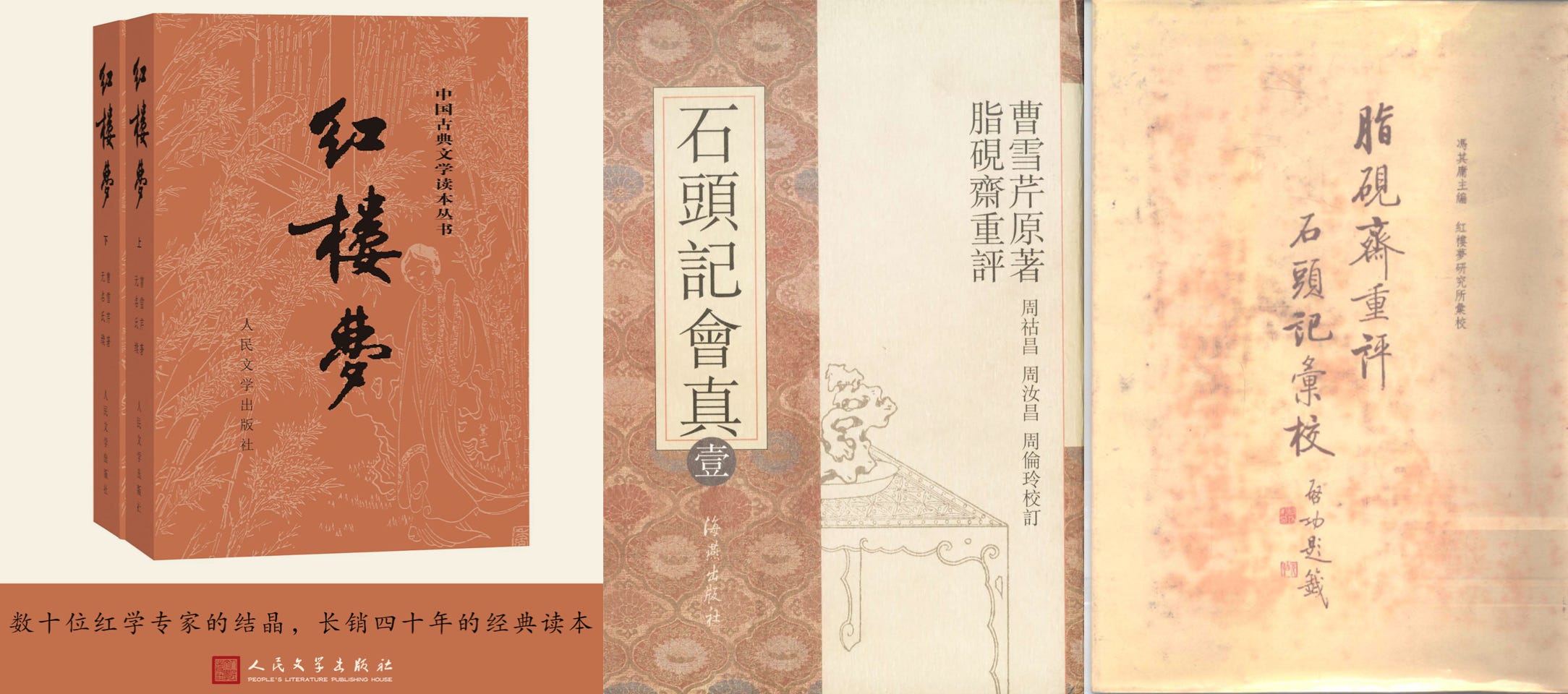
Here you’ll find the transcription in traditional Chinese characters. I will be using People’s Literature Publishing House edition of DotRC as base while consulting Gathering the True Text of The Story of the Stone as reference. Please understand that it might be quite different from the version you are familiar with.
discussion
I will use this section to host discussions for specific topics and share my thoughts. You are welcome to join our Discord server too!
miscellaneous
This section contains supplementary materials, such as character family networks, story timelines, character analyses, trivia, and other useful notes.
Which version is it based on?
The aforementioned edition mainly used the Geng-Chen manuscript for the first 80 chapters, with reference to other hand-copied manuscripts, and the Cheng-Jia edition for the final 40 chapters.
I choose it because it was collated and annotated by decades of Redologists (Redology scholars) of the DotRC Research Institute of the Chinese National Academy of Arts, which, to my knowledge, is the most authoritative institution in the field.
Gathering the True Text of The Story of the Stone was the result of a 56-year-long textual collation project: Dr. Zhou et al gathered and compared eleven early manuscripts of The Story of the Stone (one of the earlier title of the novel), seeking to recover the most authentic texts of the first 80 chapters. Browsing Chinese online DotRC forums, I’m delighted to see many Chinese readers no longer blindly trust the Cheng-editions, which might have been a “standard“ edition.
How do I write the annotations?
My annotations mainly draw on three kinds of sources: (1) the commentaries preserved in the original manuscripts, mainly by Zhiyanzhai (脂硯齋) and Jihusou (畸笏叟), (2) relevant entries in reference works, such as The Grand Dictionary of Dream of the Red Chamber (《紅樓夢大辭典》), and (3) Chinese dictionaries, such as The Grand Chinese Dictionary (《漢語大辭典》) and A Dictionary of Terms and Expressions in Classical Chinese Fictions (《中國古典小說用語辭典》). For passages that cannot be rendered literally in English, I will include the original Chinese.

Help me improve!
Since I am not an expert in Redology or translation, there will certainly be many mistakes. I would be grateful for your corrections, criticisms, and suggestions. See you in the comment section!